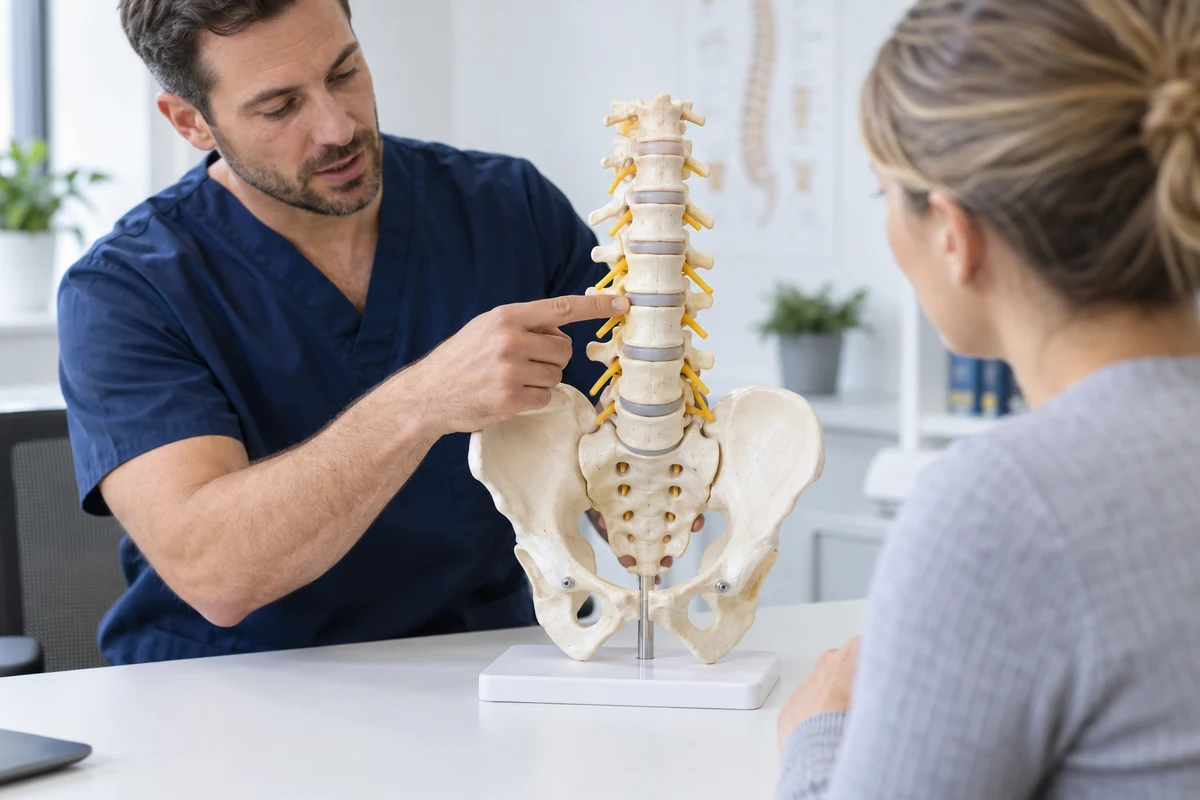
Yes, spinal decompression can help many people with sciatica, especially when leg pain comes from a bulging or herniated disc pressing on the sciatic nerve roots in the lower back. Non-surgical spinal decompression therapy gently stretches the lumbar spine to reduce disc pressure, improve circulation, and calm nerve irritation. At Acme Chiropractic in Ankeny, patients from Des Moines and Central Iowa receive a thorough exam first to confirm whether decompression fits their sciatica.
What Is Sciatica?
Sciatica is not a diagnosis on its own. It is a set of symptoms caused by irritation or compression of the sciatic nerve or the nerve roots that form it in the lower back, usually at the L4, L5, and S1 levels.
The sciatic nerve is the longest and thickest nerve in the human body. It runs from the lumbar spine through the buttock and down the back of each leg to the foot. When something presses on it, the pain can travel along that entire path.
Common sciatica symptoms include:
- Sharp, burning, or electric pain that shoots from the low back or buttock down one leg
- Numbness or tingling in the thigh, calf, or foot
- Weakness in the leg or foot, sometimes called foot drop
- Pain that worsens with sitting, coughing, sneezing, or bending forward
- Pain that is usually on one side of the body
Many Des Moines and Ankeny patients describe sciatica as a "toothache in the leg." It can make sitting at a desk, driving on I-35, or sleeping through the night feel impossible.
What Causes Sciatica?
The most common cause of sciatica is a lumbar disc problem. Spinal discs sit between the vertebrae and act as shock absorbers. Each disc has a tough outer ring called the annulus fibrosus and a gel-like center called the nucleus pulposus.
When a disc bulges or herniates, the inner material can push outward and press on a nearby nerve root. The disc material can also release inflammatory chemicals that irritate the nerve even without heavy pressure.
Other causes of sciatica include:
- Lumbar spinal stenosis: narrowing of the spinal canal or nerve openings, more common after age 50
- Degenerative disc disease: disc thinning and dehydration that reduce the space for nerves
- Spondylolisthesis: one vertebra slipping forward over another
- Piriformis syndrome: a tight piriformis muscle in the buttock irritating the sciatic nerve
- Facet joint and sacroiliac joint dysfunction: joint irritation that can refer pain into the leg
Knowing the cause matters. Spinal decompression is most helpful when sciatica is disc-related. That is why an accurate exam comes before any treatment plan.
What Is Spinal Decompression Therapy?
Non-surgical spinal decompression therapy is a motorized, computer-guided form of traction. You lie comfortably on a padded table while a harness around your hips and torso connects to the decompression system.
The table applies a slow, controlled stretch to the lumbar spine, then relaxes, in timed cycles. This gentle pull-and-release pattern is designed to avoid the muscle guarding that can happen with ordinary traction.
How Spinal Decompression Works on Discs and Nerves
Spinal decompression is designed to:
- Create negative pressure inside the disc, which may help draw bulging disc material back toward the center
- Increase the space between vertebrae, giving compressed nerve roots more room
- Encourage the flow of water, oxygen, and nutrients into the disc to support healing
- Relax tight spinal muscles that guard the injured area
Most sessions last 20 to 30 minutes. Many patients find the stretch relaxing, and some even fall asleep on the table.
Can Spinal Decompression Help Sciatica?
For the right patient, yes. Spinal decompression is most effective for sciatica caused by:
- Bulging discs
- Herniated or slipped discs
- Degenerative disc disease
- Mild to moderate lumbar spinal stenosis
- Facet syndrome related to disc height loss
Research on mechanical traction and decompression is mixed, and results vary from person to person. Many patients report less leg pain, fewer flare-ups, and better mobility after a full course of care. Outcomes are strongest when decompression is combined with chiropractic adjustments, targeted exercises, and posture changes.
Spinal decompression is not a quick fix. Disc healing takes time. Most treatment plans run several weeks, with progress checked along the way.
Who Is a Good Candidate for Spinal Decompression for Sciatica?
You may be a good candidate if you:
- Have leg pain, numbness, or tingling that started in the lower back
- Have an MRI showing a bulging or herniated lumbar disc
- Have had sciatica for more than a few weeks without lasting relief
- Want to try a non-surgical, drug-free option before injections or surgery
- Have been told surgery is an option but want to explore conservative care first
Who Should Not Have Spinal Decompression?
Spinal decompression is not right for everyone. It is usually not recommended for people with:
- Pregnancy
- Spinal fractures or severe osteoporosis
- Spinal tumors or active infection
- Metal implants, rods, or screws in the lumbar spine
- Advanced spinal fusion or certain prior back surgeries
- Severe nerve damage or progressive muscle weakness
An experienced chiropractor will review your health history, imaging, and exam findings to decide whether decompression is safe and appropriate for you.
When Sciatica Is an Emergency
Some symptoms need immediate medical care, not a chiropractic visit. Go to the nearest emergency room if you have:
- Loss of bladder or bowel control
- Numbness in the groin, inner thighs, or "saddle" area
- Sudden, severe weakness in one or both legs
- Sciatica after a major fall or car accident
- Fever with back pain
These can be signs of cauda equina syndrome or another serious condition that requires urgent treatment.
What to Expect at Your First Visit in Ankeny
Your first visit at Acme Chiropractic is focused on finding the true source of your sciatica.
- Health history: We ask when the pain started, what makes it better or worse, and how it affects your work, sleep, and daily life.
- Physical and neurological exam: We check reflexes, strength, sensation, and range of motion, and perform orthopedic tests such as the straight leg raise.
- Imaging review: If you already have an MRI or X-ray, bring it. If imaging is needed, we will explain why.
- Diagnosis and plan: We explain what is causing your symptoms and whether spinal decompression, chiropractic adjustments, or a combination makes the most sense.
- Clear expectations: You will know the expected number of visits, how progress is measured, and when a referral to another provider would be the right next step.
Our clinic is located at 701 NW School Street in Ankeny, an easy drive for patients from Des Moines, Johnston, Altoona, Urbandale, Bondurant, Polk City, and Huxley.
How Many Spinal Decompression Sessions Do You Need for Sciatica?
Most sciatica treatment plans include 12 to 24 sessions over four to eight weeks. The exact number depends on:
- How long you have had sciatica
- The size and location of the disc bulge or herniation
- Your age, activity level, and overall health
- How well you follow home exercise and posture recommendations
Many patients notice some change in leg pain within the first few weeks. Pain often retreats from the foot and calf toward the lower back first. This pattern, called centralization, is generally a positive sign that the nerve is calming down.
Spinal Decompression vs. Other Sciatica Treatments
Sciatica treatment usually starts conservatively. Here is how spinal decompression compares to other common options:
- Pain medication and muscle relaxers: can ease symptoms short term but do not change the pressure on the nerve
- Physical therapy: builds strength and mobility, and pairs well with decompression
- Chiropractic adjustments: restore joint motion and reduce mechanical stress on the lower back
- Epidural steroid injections: reduce inflammation around the nerve, though relief may be temporary
- Surgery (microdiscectomy or laminectomy): may be needed for severe or progressive cases that do not respond to conservative care
Many patients in Polk County choose spinal decompression because it is non-invasive, requires no downtime, and can be combined with other conservative treatments.
How to Support Sciatica Relief at Home
What you do between visits matters. Simple habits can protect your discs and speed recovery:
- Take short walks throughout the day instead of sitting for long periods
- Stand up and move every 30 minutes if you work at a desk
- Use a small lumbar roll when sitting or driving
- Avoid heavy lifting, twisting, and bending forward while symptoms are active
- Drink plenty of water to support disc hydration
- Follow the specific stretches and core exercises your chiropractor recommends
- Use ice or heat as directed for short periods
Iowa winters bring snow shoveling, a common trigger for sciatica flare-ups. Push snow instead of lifting it, bend at the knees, and take frequent breaks.
Frequently Asked Questions About Spinal Decompression for Sciatica
Does spinal decompression hurt?
No, spinal decompression should not hurt. Most patients feel a gentle stretch in the lower back. Some feel mild soreness after the first few sessions as the muscles adapt.
How fast does spinal decompression work for sciatica?
Many patients notice changes within two to four weeks. Lasting improvement usually takes a full course of care, often six to eight weeks.
Is spinal decompression the same as an inversion table?
No. Inversion tables provide a general stretch with no control over force or angle. Spinal decompression therapy is computer-guided, targets specific lumbar levels, and uses timed cycles to reduce muscle guarding.
Can spinal decompression help me avoid sciatica surgery?
For many people with disc-related sciatica, conservative care such as spinal decompression reduces symptoms enough that surgery is not needed. Patients with severe or progressive nerve damage may still need a surgical consultation.
Where can I find spinal decompression for sciatica near me in Des Moines?
Acme Chiropractic in Ankeny offers non-surgical spinal decompression for sciatica and serves patients from Des Moines and the surrounding Central Iowa communities.
Related Articles
- Why Does Sciatica Keep Coming Back? Common Causes and Treatment Options
- Why Is Sciatica Worse When Sitting or Driving? Tips for Des Moines & Ankeny Patients
- Spinal Decompression for Herniated Discs: Can It Help You Avoid Surgery?
Schedule a Sciatica Evaluation in Des Moines & Ankeny
If sciatica is keeping you from work, sleep, or the activities you love, you do not have to keep guessing. The trusted team at Acme Chiropractic will find the cause of your leg pain and tell you honestly whether spinal decompression can help.
Call (515) 341-0120 or visit us at 701 NW School Street, Ankeny, IA 50023 to schedule your sciatica evaluation. New patients are welcome, and our team speaks English and Spanish.