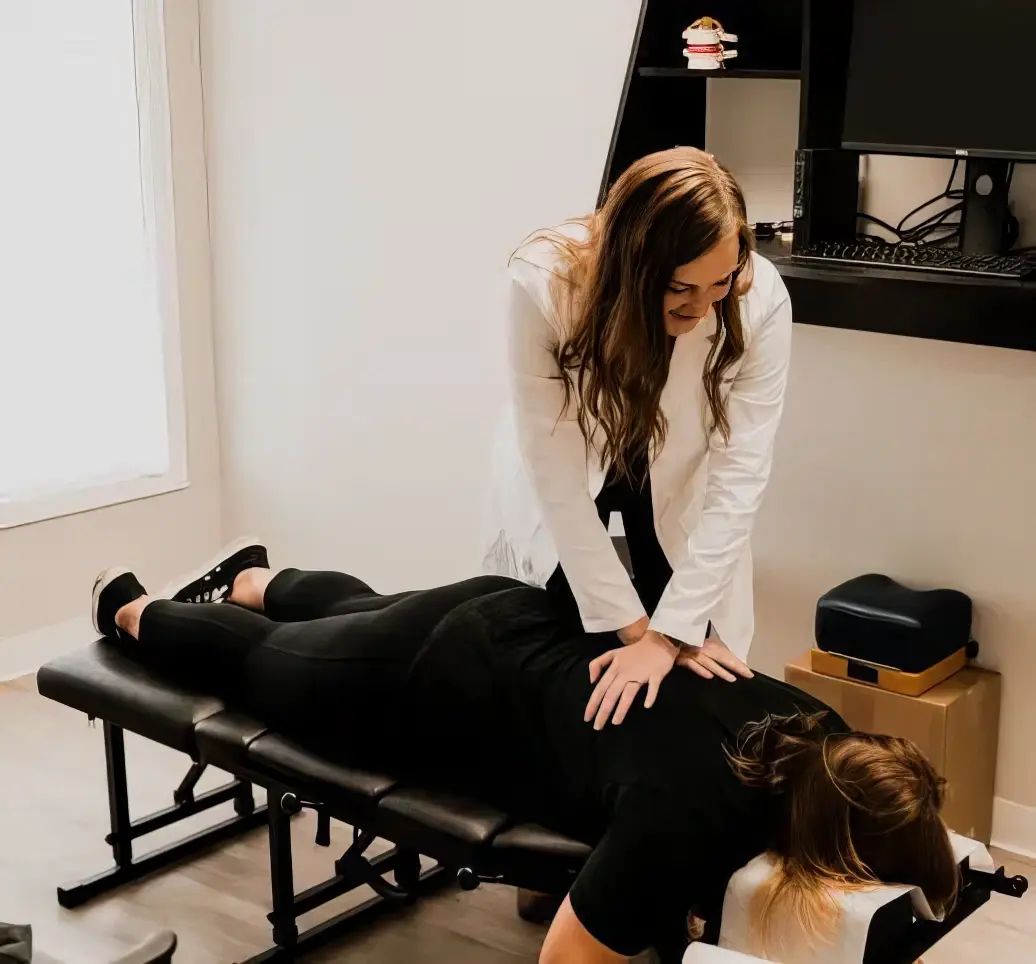
Tech neck is neck pain, stiffness, and headaches caused by looking down at phones, laptops, and computer screens for long periods, which pushes the head forward and overloads the cervical spine. Chiropractic care helps tech neck by restoring joint motion, relaxing tight neck and shoulder muscles, and correcting forward head posture. Acme Chiropractic in Ankeny helps Des Moines desk workers reduce neck pain with adjustments, rehab exercises, and ergonomic guidance.
What Is Tech Neck?
Tech neck, also called text neck, is a repetitive strain condition caused by bending the head forward and down to look at screens. It is one of the most common reasons office workers, students, and remote employees seek chiropractic care.
The average adult head weighs about 10 to 12 pounds. When the head is balanced over the shoulders, the neck supports that weight easily. As the head tilts forward, the effective load on the cervical spine increases dramatically. Biomechanical research estimates that a 45-degree forward tilt can place roughly 40 to 50 pounds of force on the neck.
Over hours, days, and years, that extra load strains muscles, ligaments, joints, and discs.
Common Symptoms of Tech Neck
- Neck pain and stiffness, especially at the end of the workday
- Tight, sore shoulders and upper back
- Tension headaches that start at the base of the skull
- Pain between the shoulder blades
- Reduced ability to turn or tilt the head
- Forward head posture and rounded shoulders
- Tingling or numbness in the arms or hands in some cases
- Jaw tension and eye strain
Many Des Moines professionals notice their symptoms building through the week, then easing on weekends, a strong clue that work posture is involved.
Why Does Sitting at a Desk Cause Neck Pain?
Forward Head Posture
When your monitor is too low, too far away, or your laptop sits on the desk, your head drifts forward to see the screen. This posture strains the muscles at the back of the neck and compresses the joints at the base of the skull.
Rounded Shoulders
Reaching for a keyboard or mouse pulls the shoulders forward. Over time, the chest muscles tighten and the upper back muscles weaken, creating a hunched posture that drags the neck along with it.
Static Positions
The spine is built to move. Holding one position for hours reduces circulation to muscles and joints and leads to stiffness and fatigue.
Phone and Laptop Habits
Checking your phone between meetings, working from the couch, and using a laptop without an external monitor all add more time in a head-down position.
Stress
Work stress causes many people to tighten their shoulders and upper trapezius muscles without realizing it, adding to neck tension.
What Happens if Tech Neck Is Ignored?
Tech neck often starts as mild stiffness, but long-term strain can lead to:
- Chronic neck pain and recurring tension headaches
- Loss of the natural forward curve of the neck, known as cervical lordosis
- Muscle imbalances that are harder to correct over time
- Increased wear on cervical joints and discs
- Cervical disc bulges or herniations that cause arm pain and numbness
- Upper back pain and shoulder problems
Addressing tech neck early is easier than correcting years of postural strain.
How Chiropractic Care Helps Tech Neck
Chiropractic care focuses on the joints, muscles, and movement patterns behind your neck pain, not just the symptoms.
Thorough Neck and Posture Exam
Your first visit includes a review of your symptoms, work setup, and daily habits, plus a posture assessment, range of motion testing, and a neurological exam of the arms when needed.
Chiropractic Adjustments
Gentle adjustments restore motion to stiff joints in the cervical spine and upper back. Acme Chiropractic uses techniques such as Diversified and the low-force Activator technique, so care can be matched to your comfort level.
Upper Back Mobility
A stiff thoracic spine forces the neck to work harder. Improving mid back motion often reduces neck strain significantly.
Soft Tissue Therapy
Targeted work on the upper trapezius, levator scapulae, suboccipital, and chest muscles helps release chronic tension.
Corrective Exercises
Strengthening the deep neck flexors and upper back muscles helps your body hold better posture on its own. Simple exercises such as chin tucks and shoulder blade squeezes are often part of the plan.
Cervical Decompression When Needed
If tech neck has led to a cervical disc bulge or herniation with arm pain, cervical spinal decompression may be recommended to reduce disc pressure and nerve irritation.
Desk Ergonomics Tips to Prevent Tech Neck
Small workstation changes can make a big difference:
- Raise your monitor so the top of the screen is at or slightly below eye level
- Place the monitor about an arm's length away
- Use an external keyboard, mouse, and stand if you work on a laptop
- Keep your elbows close to your body and bent at about 90 degrees
- Sit back in your chair with lumbar support and feet flat on the floor
- Use a headset for long phone calls instead of cradling the phone
- Use two monitors side by side at the same height if you work with both
Daily Habits to Reduce Neck Pain
- Follow the 20-20-20 rule: every 20 minutes, look at something 20 feet away for 20 seconds
- Stand up and move every 30 minutes
- Raise your phone to eye level instead of looking down
- Avoid working from the couch or bed for long periods
- Sleep with a supportive pillow that keeps your neck in line with your spine
- Stay hydrated and active outside work
Simple Stretches for Tech Neck
Try these gentle movements during the workday. Stop if any movement causes sharp pain, numbness, or tingling.
- Chin tucks: gently draw your chin straight back to create a double chin, hold for five seconds, and repeat ten times
- Upper trapezius stretch: tilt your ear toward your shoulder and hold for 20 to 30 seconds per side
- Doorway chest stretch: place forearms on a doorframe and gently lean forward to open the chest
- Shoulder blade squeezes: pull your shoulder blades back and down, hold for five seconds, and repeat
- Thoracic extension: sit tall and gently arch your upper back over the top of your chair
When to See a Chiropractor for Neck Pain
Schedule an evaluation if:
- Neck pain lasts longer than a week or keeps coming back
- You have frequent tension headaches
- Pain or numbness travels into your shoulder, arm, or hand
- Turning your head while driving is difficult
- Ergonomic changes alone have not helped
Seek immediate medical care for neck pain after trauma, neck pain with fever and a stiff neck, sudden severe headache, or weakness, dizziness, or trouble with speech or vision.
Tech Neck in Students and Remote Workers
Tech neck is not limited to office employees. Students studying on laptops, gamers, and remote workers who move between the kitchen table, couch, and bed are often at even higher risk because their setups change throughout the day.
A few simple steps help anyone who works or studies from home:
- Create one dedicated workspace with a proper chair and a raised screen
- Use a laptop stand with a separate keyboard and mouse
- Set a timer to stand, stretch, and reset your posture every 30 minutes
- Limit phone scrolling in bed, where the neck often bends sharply forward
- Keep screens at eye level during video calls
Parents in Des Moines and Ankeny are also noticing tech neck in teens who spend hours on phones and tablets. Early posture habits, regular movement, and a quick posture check during routine care can help younger patients avoid long-term neck problems.
Frequently Asked Questions About Tech Neck
Can a chiropractor fix tech neck?
A chiropractor can help reduce tech neck pain and stiffness by restoring joint motion, releasing tight muscles, and teaching corrective exercises and ergonomic habits. Lasting results depend on combining care with daily posture changes.
How long does it take to correct forward head posture?
Many people feel less pain within a few weeks. Improving long-standing forward head posture usually takes several months of consistent exercises and habit changes.
Is tech neck permanent?
Tech neck is usually reversible, especially when addressed early. Long-term strain can lead to joint and disc changes, which is why early care matters.
Can tech neck cause headaches?
Yes. Tight muscles and stiff joints at the top of the neck commonly trigger tension headaches and cervicogenic headaches.
Where can I find a neck pain chiropractor near me in Ankeny or Des Moines?
Acme Chiropractic at 701 NW School Street in Ankeny treats tech neck and desk-related neck pain and serves patients across the Des Moines metro.
Related Articles
- Why Is Sciatica Worse When Sitting or Driving? Tips for Des Moines & Ankeny Patients
- Spinal Decompression vs. Chiropractic Adjustments: Which Is Better for Back Pain?
- Bulging Disc vs. Herniated Disc: What's the Difference and How Can Chiropractic Care Help?
Get Relief From Tech Neck in Des Moines & Ankeny
Your job may keep you at a screen, but neck pain does not have to come with it. The experienced team at Acme Chiropractic will find what is driving your neck pain and give you a clear plan, from adjustments to desk setup changes, to help you work comfortably again.
Call (515) 341-0120 or visit 701 NW School Street, Ankeny, IA 50023 to schedule your neck pain evaluation. We serve Des Moines, Ankeny, Johnston, Urbandale, West Des Moines, and Altoona.